AI Trading Card Grading: How Computer Vision Can Improve Transparency
AI-assisted grading is most useful when it does more than output a score. Computer vision can help organize visual evidence, measure geometry and flag areas that deserve closer review.
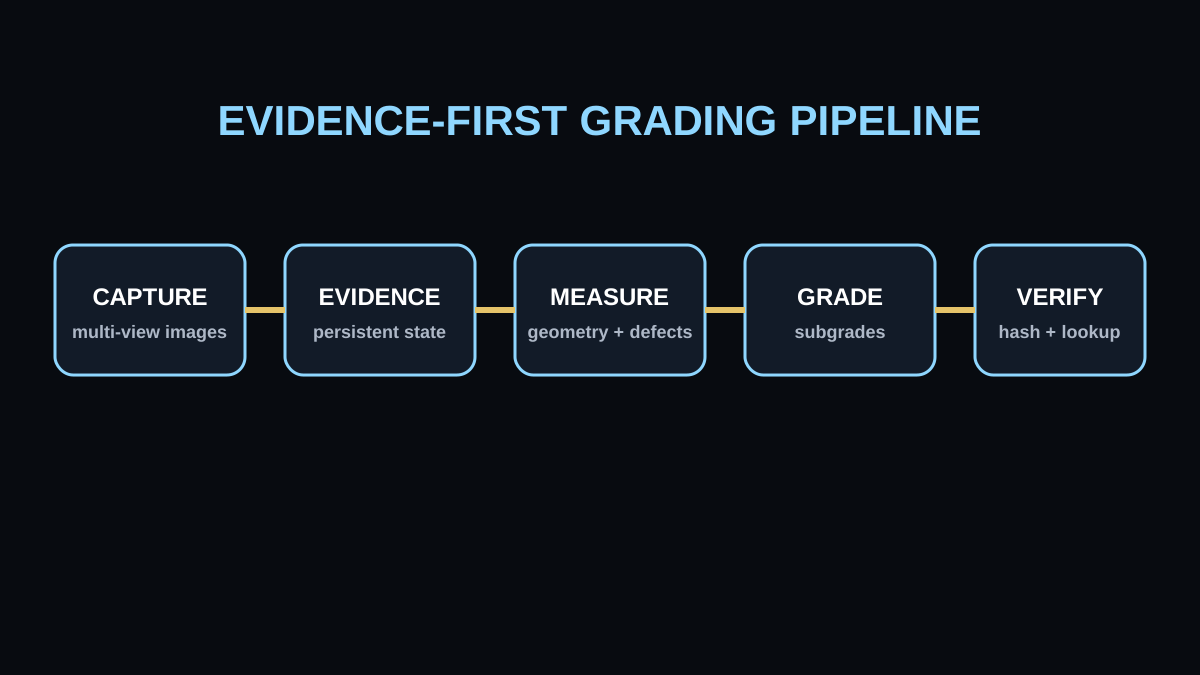
Capture comes first
Reliable analysis starts with useful source images. Multiple views and lighting conditions can expose different classes of defects and reduce dependence on a single photograph.
Computer vision and geometry
Software can assist with card boundary detection, centering geometry and repeatable inspection of image regions. The objective is not to pretend that every visual question is trivial; it is to make the evidence behind the decision more explicit.
Preserve the evidence
CardDNA is designed to retain images, measurements, subgrades and verification information alongside the final grade. This creates a more inspectable record for collectors.
AI-assisted, evidence-first
Automation should improve consistency and speed without hiding the basis of the result. A transparent workflow lets the collector see what was evaluated and how the reported grade relates to the captured evidence.