How CardDNA Works
CardDNA combines controlled image capture, geometry, defect-focused analysis, preserved evidence and digital verification into a transparent grading workflow.
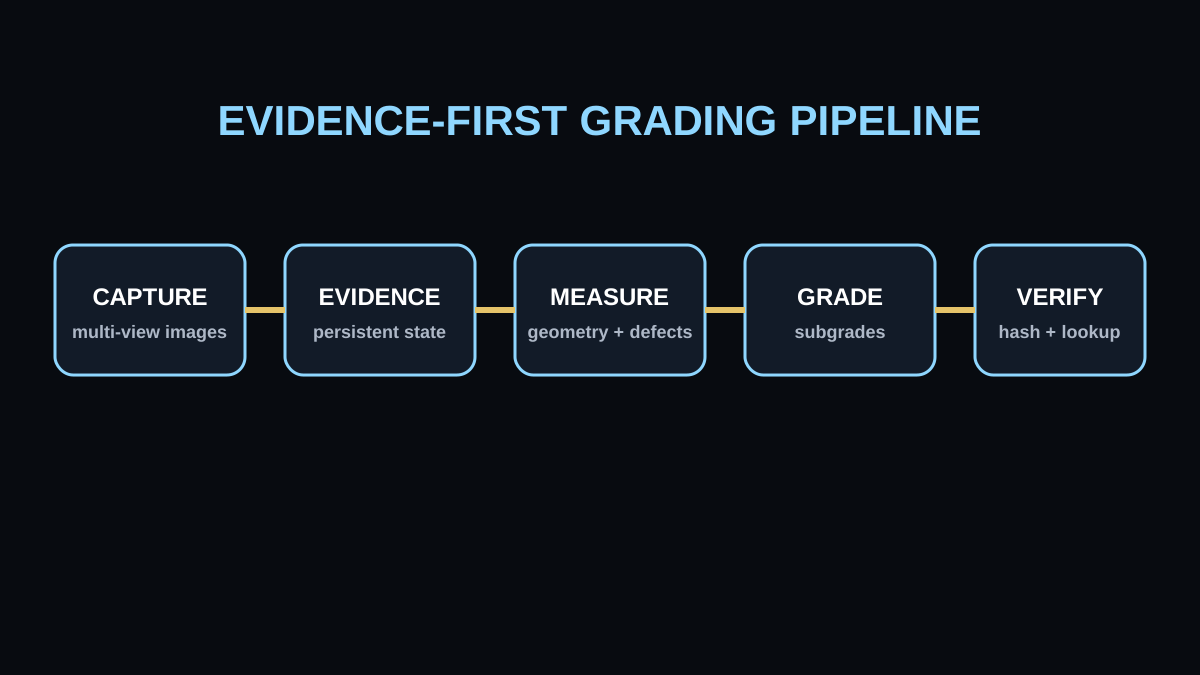
1. Capture
Multiple card views preserve visual evidence useful for evaluating centering, corners, edges and surface.
2. Evidence state
CardDNA organizes captured imagery and derived measurements into a persistent evidence record so the final result is tied to inspectable inputs.
3. Measurement and analysis
Geometry supports centering analysis while high-resolution imagery supports defect inspection and subgrade evaluation.
4. Grade and report
The grading policy converts the evidence into subgrades and an overall CardDNA result, accompanied by report imagery and measurements.
5. Verification
Digital identifiers, report lookup and cryptographic hashing can help maintain continuity between the grading record and its stored evidence.