Trading Card Digital Fingerprinting: Authentication, Hashes & Verification
A digital fingerprint does not replace physical authentication. It creates a compact cryptographic reference that can help verify whether stored digital evidence has changed.
What is SHA-256?
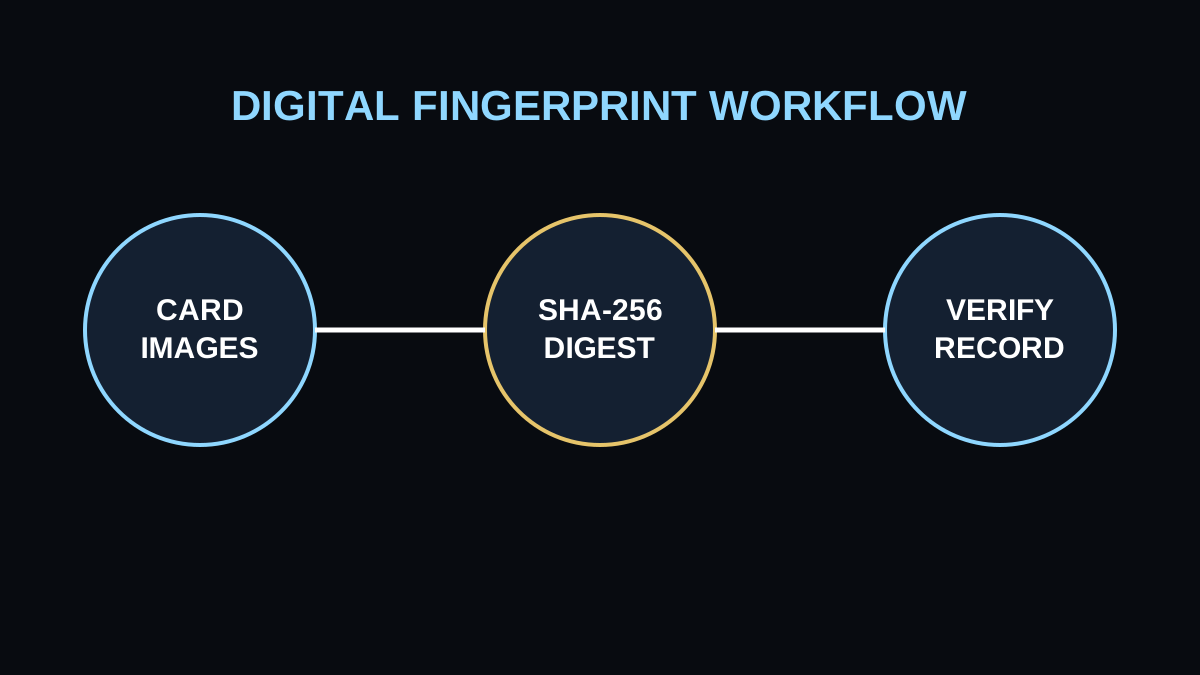
SHA-256 is a cryptographic hash function that converts data into a fixed-length digest. If the underlying data changes, the resulting digest is expected to change as well.
Why pair hashes with card evidence?
A hash is most useful when the underlying evidence is clearly defined. CardDNA associates verification information with captured card imagery and report data so a lookup can point back to a specific grading record.
What this can and cannot prove
A cryptographic digest can help detect changes to digital data. It does not, by itself, prove that a physical card is genuine. Physical inspection, provenance, imaging and other authentication evidence remain important.