Trading Card Centering Guide: How Centering Is Measured
Centering is one of the most measurable parts of card grading, but the result depends on identifying the correct card boundaries and printed reference geometry.
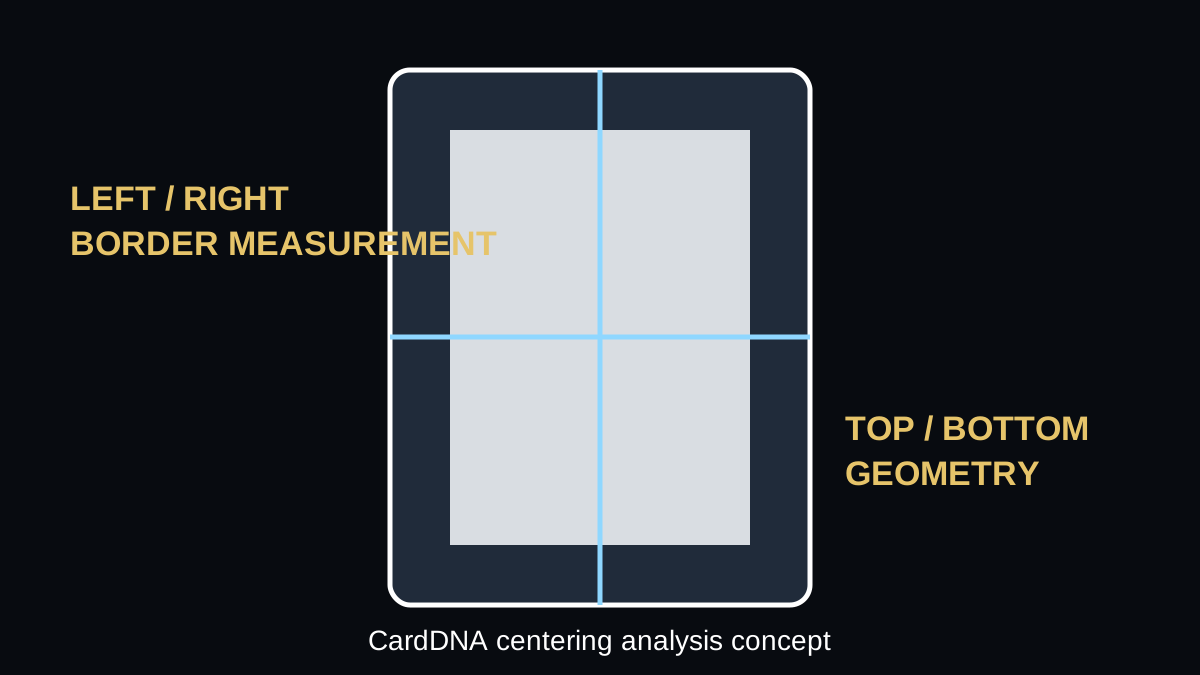
What does 50/50 centering mean?
In a simple bordered design, 50/50 means the opposing borders are equal. Real cards are more complicated: artwork, frames, print registration and asymmetrical designs can affect which references are meaningful.
Measure both axes
Left-right and top-bottom measurements answer different questions. Reporting both makes the analysis more transparent and prevents one strong axis from hiding weakness on the other.
Front and back are separate evidence
The reverse can be centered differently from the front. A defensible report should preserve both views and state which measurements were used.
Geometry before grade
CardDNA's approach separates measurement evidence from the final grading policy. That distinction is useful because measurements can remain reviewable even if grading standards evolve.